Key Takeaways
• Knee pain is one of the most common orthopedic conditions affecting individuals across all age groups.
• Causes range from acute injuries such as ligament tears to chronic conditions like arthritis.
• Symptoms may include swelling, stiffness, instability, and difficulty with daily movement.
• The location and timing of pain often provide important clues about the underlying condition.
• Treatment options include rest, physical therapy, injections, and surgical procedures depending on severity.
• Early evaluation and structured treatment can prevent long-term joint damage and mobility issues.
Schedule an Appointment(opens in a new tab)
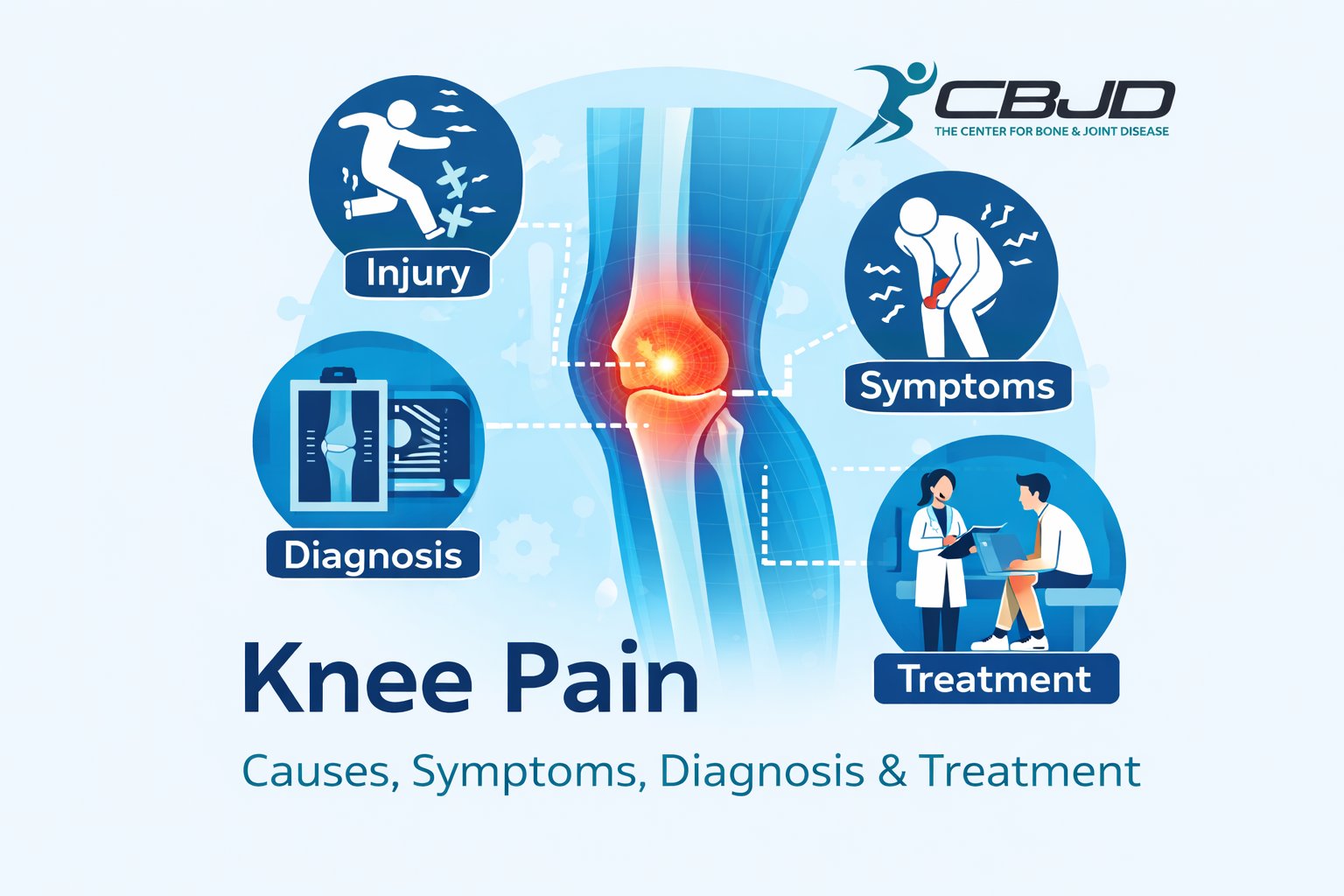
Understanding Knee Pain
Knee pain is a widespread condition that affects athletes, active individuals, and even those with sedentary lifestyles. The knee joint plays a critical role in supporting body weight and enabling movement such as walking, running, climbing stairs, and standing.
Because of its complex structure, the knee is vulnerable to both acute injuries and chronic degenerative conditions. Pain may develop suddenly after trauma or gradually over time due to wear and tear.
Many patients initially try to understand why their knee hurts(opens in a new tab), especially when symptoms appear without a clear cause.
Understanding the root cause of knee pain is essential because treatment approaches vary significantly depending on the underlying condition.
Anatomy of the Knee Joint
The knee is one of the largest and most complex joints in the human body. It is made up of bones, cartilage, ligaments, tendons, and surrounding muscles that work together to provide stability and movement.
bones including the femur, tibia, and patella
cartilage that cushions the joint
ligaments that provide stability
tendons that connect muscles to bones
Damage to any of these structures can lead to pain, swelling, and reduced mobility.
Common Causes of Knee Pain
Knee pain can arise from a wide range of conditions. Broadly, these can be categorized into injuries, overuse conditions, and chronic diseases.
Traumatic Injuries
Injuries often occur during sports, accidents, or sudden movements.
anterior cruciate ligament (ACL) tears
meniscus tears caused by twisting movements
ligament sprains
fractures
These injuries are commonly explained in detail when discussing ACL injuries and meniscus tears(opens in a new tab), which can significantly impact joint stability.
Overuse Injuries
Repetitive stress on the knee can lead to inflammation and irritation of surrounding structures.
patellar tendonitis
runner’s knee
bursitis
These conditions often present as pain while walking(opens in a new tab) or during physical activity.
Degenerative Conditions
Chronic conditions develop gradually and are more common with aging.
osteoarthritis
cartilage degeneration
chronic inflammation
These conditions may cause persistent pain, stiffness, and reduced joint function.
Symptoms of Knee Pain
The symptoms of knee pain vary depending on the cause and severity of the condition.
sharp or dull pain
swelling or fluid buildup
stiffness or limited movement
instability or weakness
clicking or popping sounds
Some individuals also report knee pain at night(opens in a new tab), which may indicate inflammation or degenerative joint disease.
Types of Knee Pain Based on Location
The location of knee pain often helps identify the underlying condition.
Inner Knee Pain
This type of pain may be associated with ligament injuries or meniscus damage. Patients often explore inner knee pain causes(opens in a new tab) to better understand these conditions.
Outer Knee Pain
Often related to overuse injuries such as iliotibial band syndrome.
Front Knee Pain
Commonly linked to patellar tracking issues or tendonitis.
Back of the Knee
May indicate swelling, cysts, or muscle-related conditions.
Knee Pain and Daily Activities
Knee pain often becomes more noticeable during everyday activities. Simple movements such as walking, climbing stairs, or standing for long periods can aggravate symptoms.
For many individuals, discomfort is most noticeable during walking or weight-bearing activities(opens in a new tab), which can indicate underlying joint stress or structural damage.
Understanding how pain presents during activity helps guide diagnosis and treatment planning.
Diagnosis of Knee Pain
Accurate diagnosis is essential to determine the cause of knee pain and develop an effective treatment plan.
Evaluation typically includes:
review of symptoms and medical history
physical examination of joint movement
assessment of swelling and tenderness
Imaging Tests
X-rays to evaluate bone structure
MRI scans for soft tissue injuries
ultrasound for inflammation
These diagnostic tools help identify structural damage and guide treatment decisions.
Knee Swelling and Inflammation
Swelling is a common symptom that may occur due to injury, inflammation, or fluid accumulation within the joint.
Patients experiencing swelling often research knee swelling causes and treatment(opens in a new tab) to better understand why it occurs.
Persistent swelling may indicate more serious conditions and should not be ignored.
Treatment Options for Knee Pain
Treatment varies depending on the cause and severity of the condition.
Conservative Treatment
rest and activity modification
physical therapy
anti-inflammatory medications
bracing or support
Advanced Treatment Options
injections for pain relief
arthroscopic procedures
ligament reconstruction
joint replacement surgery
Many patients explore treatment options for knee pain(opens in a new tab) to understand both non-surgical and surgical approaches.
If symptoms persist, it is important to consult a specialist(opens in a new tab) for a personalized treatment plan.
When to See a Doctor for Knee Pain
While mild knee pain may resolve with rest, certain symptoms require medical evaluation.
severe or worsening pain
significant swelling
inability to bear weight
joint instability
symptoms lasting more than a few days
Understanding when to seek medical care(opens in a new tab) can help prevent long-term complications.
Preventing Knee Pain
Preventive strategies play an important role in maintaining knee health.
maintaining a healthy weight
strengthening surrounding muscles
warming up before physical activity
avoiding sudden increases in intensity
Taking proactive steps can significantly reduce the risk of injury and long-term joint issues.
Schedule a Consultation(opens in a new tab)
Frequently Asked Questions
What is the most common cause of knee pain?
Common causes include arthritis, ligament injuries, and meniscus tears.
Can knee pain go away on its own?
Mild knee pain may improve with rest, but persistent symptoms should be evaluated.
How do I know if my knee pain is serious?
Severe pain, swelling, instability, or difficulty walking may indicate a serious condition.
What treatments are available for knee pain?
Treatment options include physical therapy, medications, injections, and surgical procedures.
When should I see a specialist?
You should seek evaluation if pain persists, worsens, or interferes with daily activities.
