Key Takeaways
• Inner knee pain is often caused by ligament injuries, meniscus tears, or joint degeneration.
• The medial side of the knee is particularly vulnerable to stress and injury.
• Symptoms may include localized pain, swelling, stiffness, and difficulty walking.
• Both acute injuries and chronic conditions can contribute to inner knee pain.
• Early diagnosis helps prevent worsening damage and improves recovery outcomes.
• Persistent or severe symptoms should be evaluated by a specialist.
Consult a Knee Specialist(opens in a new tab)
What Is Inner Knee Pain?
Inner knee pain(opens in a new tab) refers to discomfort along the medial (inside) portion of the knee joint. This area plays a critical role in stabilizing the knee during movement, making it particularly susceptible to injury and stress.
Many individuals experiencing medial knee discomfort first try to understand why their knee hurts(opens in a new tab), especially when symptoms develop without a clear injury.
Because multiple structures exist in this region—including ligaments, cartilage, and tendons—accurate diagnosis is essential for effective treatment.
Common Causes of Inner Knee Pain
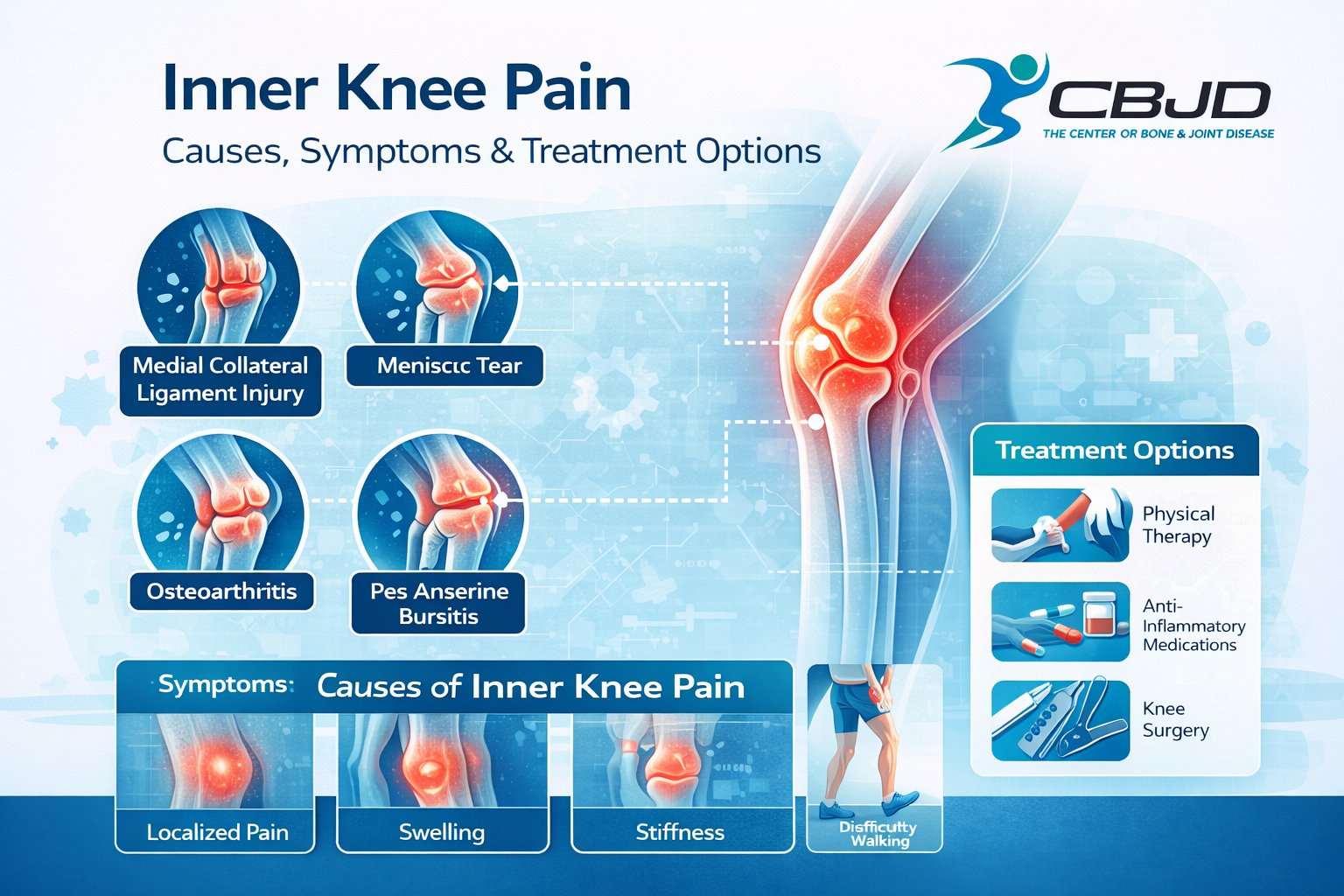
1. Medial Collateral Ligament (MCL) Injury
The MCL is a key stabilizing ligament located on the inner side of the knee. It helps prevent excessive inward movement of the joint.
direct impact to the knee
twisting injuries
sports-related trauma
MCL injuries are commonly seen in athletes and can range from mild sprains to complete tears.
2. Meniscus Tear
The medial meniscus acts as a cushion within the knee joint. Tears can occur due to sudden twisting movements or gradual degeneration.
These injuries are discussed in detail in knee injuries involving cartilage and ligaments(opens in a new tab).
pain with movement
locking or catching sensation
swelling
3. Osteoarthritis
Degenerative joint disease commonly affects the medial compartment of the knee, leading to chronic inner knee pain.
cartilage wear and tear
joint stiffness
progressive pain with activity
4. Pes Anserine Bursitis
This condition involves inflammation of the bursa located on the inner side of the knee.
localized tenderness
pain during movement
increased discomfort with activity
5. Overuse Injuries
Repetitive stress can lead to irritation and inflammation in the medial knee structures.
running-related strain
improper biomechanics
muscle imbalances
Symptoms of Inner Knee Pain
The symptoms of inner knee pain vary depending on the underlying cause.
localized pain along the inner knee
swelling or inflammation
stiffness or reduced mobility
instability or weakness
difficulty walking or bending the knee
If swelling is present, reviewing knee swelling causes(opens in a new tab) can provide additional insight.
Inner Knee Pain During Movement
Pain While Walking
Inner knee pain often becomes more noticeable during walking or weight-bearing activities.
This may indicate structural issues within the joint, as explained in knee pain while walking(opens in a new tab).
Pain at Night
In some cases, discomfort may worsen at night due to inflammation or chronic joint conditions.
Learn more about knee pain at night(opens in a new tab).
When Should You Be Concerned?
While mild inner knee pain may improve with rest, certain symptoms require medical attention.
severe or worsening pain
inability to bear weight
significant swelling
instability or knee “giving out”
persistent symptoms
Understanding when to see a doctor for knee pain(opens in a new tab) can help guide timely care.
How Inner Knee Pain Is Diagnosed
Diagnosis involves a comprehensive evaluation of symptoms and physical examination.
assessment of joint stability
range of motion testing
evaluation of tenderness and swelling
Imaging such as MRI or X-rays may be used to confirm structural damage.
Treatment Options
Treatment depends on the cause and severity of the condition.
For a comprehensive overview, see knee pain treatment options(opens in a new tab).
Non-Surgical Treatments
rest and activity modification
physical therapy
anti-inflammatory medications
bracing or support
Advanced Treatments
injections
regenerative therapies
Surgical Options
arthroscopic surgery
ligament repair
partial or total knee replacement
How to Prevent Inner Knee Pain
Preventive strategies can reduce the risk of injury and chronic pain.
strengthen surrounding muscles
improve flexibility
maintain proper alignment during activity
avoid overuse
use proper footwear
Final Thoughts
Inner knee pain can result from a wide range of conditions, from minor overuse injuries to more serious structural damage. Identifying the cause early allows for effective treatment and improved recovery.
If symptoms persist or worsen, seeking professional care can help restore function and prevent long-term complications.
Schedule Your Consultation(opens in a new tab)
Frequently Asked Questions
What causes pain on the inner side of the knee?
Common causes include MCL injuries, meniscus tears, arthritis, and overuse conditions.
Is inner knee pain serious?
It can be, especially if associated with swelling, instability, or persistent symptoms.
Can inner knee pain heal on its own?
Mild cases may improve with rest, but more severe injuries require medical evaluation.
How do you treat inner knee pain?
Treatment may include rest, therapy, medications, or surgical intervention depending on the cause.
When should I see a doctor for inner knee pain?
You should seek care if pain is severe, persistent, or affects mobility.