Key Takeaways
• Knee injuries commonly involve structures such as the ACL, meniscus, and supporting ligaments.
• ACL injuries often occur during sudden pivoting or high-impact sports activities.
• Meniscus tears typically result from twisting movements or age-related degeneration.
• Ligament damage can lead to instability, swelling, and difficulty bearing weight.
• Early diagnosis is essential to prevent long-term joint damage and instability.
• Treatment options range from conservative care to surgical intervention depending on severity.
Consult a Specialist(opens in a new tab)
Understanding Knee Injuries
The knee joint(opens in a new tab) is one of the most complex and heavily used joints in the body. It supports body weight, enables movement, and absorbs shock during daily activities such as walking, running, and climbing stairs.
Because of its structure and function, the knee is highly vulnerable to injury. Many individuals experiencing discomfort initially notice symptoms described in why the knee hurts(opens in a new tab), but underlying structural damage may involve ligaments or cartilage.
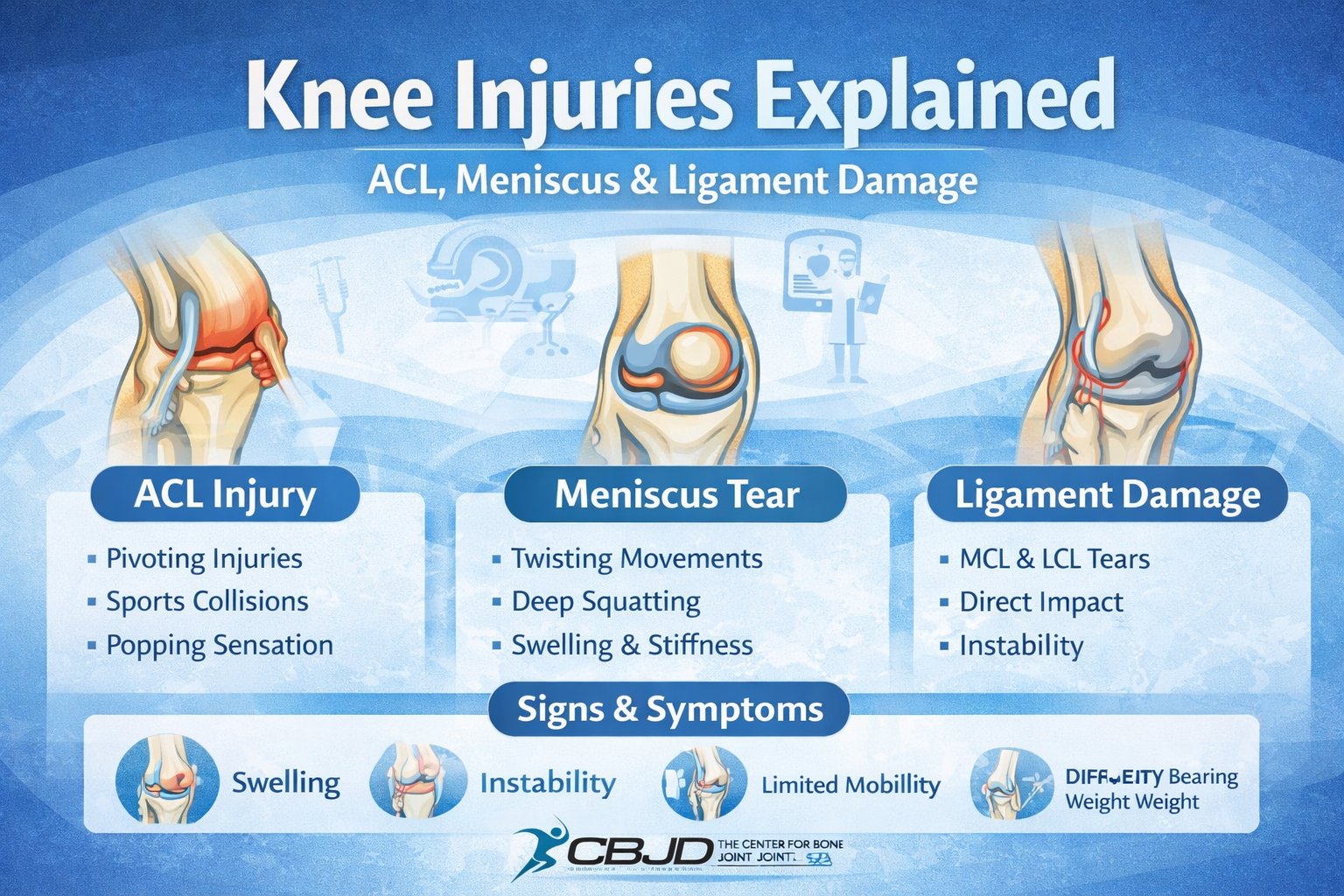
Knee injuries typically affect three major structures:
ligaments (ACL, PCL, MCL, LCL)
meniscus (cartilage cushioning)
supporting soft tissues
Understanding these injuries helps patients recognize symptoms early and seek appropriate care.
What Is an ACL Injury?
The anterior cruciate ligament (ACL) is one of the key stabilizing ligaments in the knee. It prevents excessive forward movement of the tibia and helps maintain joint stability.
Common Causes of ACL Injuries
ACL injuries are often associated with sports and high-impact activities.
sudden changes in direction
pivoting movements
landing incorrectly from a jump
direct impact to the knee
Symptoms of an ACL Tear
a popping sensation at the time of injury
rapid swelling
knee instability or “giving way”
difficulty bearing weight
Patients experiencing instability while moving or walking with knee pain(opens in a new tab) may have underlying ligament damage.
What Is a Meniscus Tear?
The meniscus is a C-shaped piece of cartilage that cushions the knee joint and distributes weight evenly across the joint surface.
Each knee has two menisci:
medial meniscus (inner side)
lateral meniscus (outer side)
Causes of Meniscus Tears
twisting or rotating the knee
sudden directional changes
deep squatting
age-related degeneration
Meniscus injuries are also commonly associated with inner knee pain(opens in a new tab) due to medial cartilage involvement.
Symptoms of a Meniscus Tear
pain during twisting movements
swelling and stiffness
locking or catching sensation
reduced range of motion
Understanding Ligament Injuries in the Knee
In addition to the ACL, the knee contains several other ligaments that contribute to stability.
Major Knee Ligaments
ACL (anterior cruciate ligament)
PCL (posterior cruciate ligament)
MCL (medial collateral ligament)
LCL (lateral collateral ligament)
Damage to any of these ligaments can result in instability, swelling, and functional limitations.
In many cases, ligament injuries contribute to symptoms such as knee swelling(opens in a new tab) or difficulty performing routine activities.
How Knee Injuries Occur
Knee injuries can result from both acute trauma and repetitive stress.
Acute Injuries
sports collisions
falls
sudden twisting movements
Chronic or Degenerative Causes
repetitive stress
aging-related cartilage wear
poor biomechanics
Symptoms that worsen over time, especially knee pain at night(opens in a new tab), may indicate chronic structural issues.
Diagnosing Knee Injuries
Accurate diagnosis is essential for determining the appropriate treatment plan.
Clinical Evaluation
physical examination
range of motion assessment
stability testing
Imaging Tests
MRI scans
X-rays (to rule out fractures)
ultrasound imaging
Patients unsure about their symptoms may benefit from understanding knee pain causes and diagnosis(opens in a new tab) before seeking evaluation.
Treatment Options for Knee Injuries
Treatment depends on the severity and type of injury.
Non-Surgical Treatment
rest and activity modification
physical therapy
bracing
anti-inflammatory medications
Minimally Invasive Treatments
corticosteroid injections
PRP therapy
viscosupplementation
Surgical Treatment
ACL reconstruction
meniscus repair or removal
arthroscopic surgery
A complete overview of treatment pathways is explained in knee pain treatment options(opens in a new tab).
When Should You See a Doctor?
Some knee injuries require immediate medical attention.
severe swelling
inability to bear weight
joint instability
persistent pain
If symptoms do not improve or worsen, it is important to understand when to see a doctor for knee pain(opens in a new tab).
Book an Evaluation(opens in a new tab)
Frequently Asked Questions
What is the most common knee injury?
ACL tears and meniscus injuries are among the most common knee injuries, particularly in active individuals and athletes.
Can a meniscus tear heal without surgery?
Some minor meniscus tears may heal with conservative treatment, while more severe tears may require surgical repair.
How do I know if I tore my ACL?
A popping sensation, swelling, and instability are common signs of an ACL tear and should be evaluated by a specialist.
What happens if a ligament injury is untreated?
Untreated ligament injuries can lead to chronic instability, joint damage, and long-term functional limitations.
How long does it take to recover from a knee injury?
Recovery depends on the severity of the injury, ranging from a few weeks for mild injuries to several months for surgical cases.
