Key Takeaways
• Knee swelling is often caused by injury, inflammation, or underlying joint conditions.
• Fluid buildup in the knee joint can result from trauma, overuse, or medical conditions like arthritis.
• Symptoms may include stiffness, reduced mobility, and visible swelling around the knee.
• Mild swelling may improve with rest, but persistent or severe swelling requires medical evaluation.
• Early diagnosis helps prevent long-term joint damage and complications.
• Treatment options range from conservative care to advanced medical interventions.
Consult a Knee Specialist(opens in a new tab)
What Causes Knee Swelling?
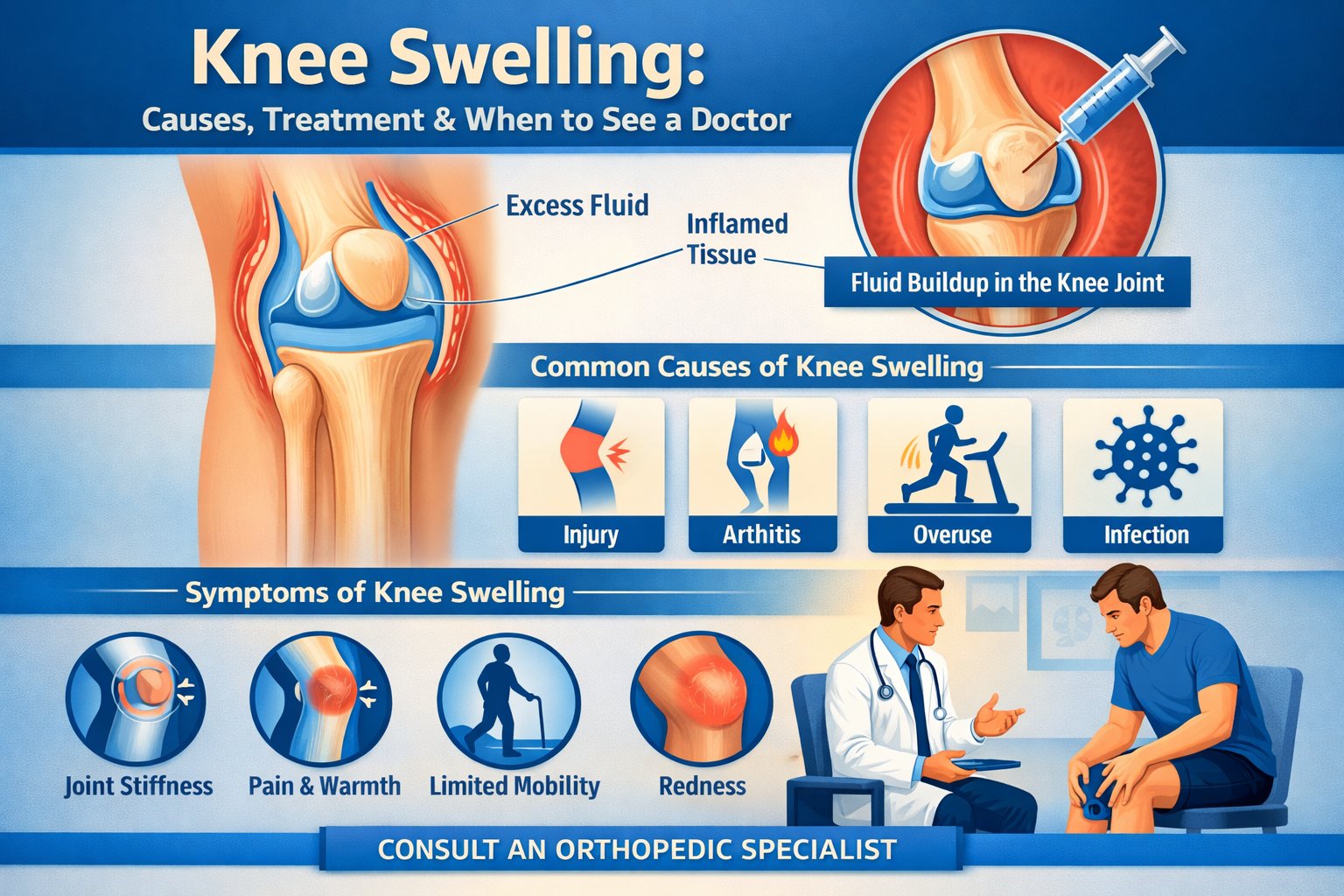
Knee swelling occurs when excess fluid accumulates in or around the joint and causes knee pain(opens in a new tab). This condition, often referred to as “water on the knee,” can develop suddenly after an injury or gradually due to underlying medical conditions.
Many patients experiencing swelling begin by understanding why their knee hurts(opens in a new tab), as swelling is often accompanied by pain or discomfort.
The knee joint is surrounded by ligaments, cartilage, and synovial fluid. When these structures become irritated or damaged, fluid buildup can occur as part of the body’s inflammatory response.
Common Causes of Knee Swelling
1. Acute Injuries
Sudden trauma is one of the most common causes of knee swelling.
ACL injuries
meniscus tears
ligament sprains
fractures
These injuries are explained in knee injuries involving ligaments and cartilage(opens in a new tab).
2. Overuse and Repetitive Stress
Repeated stress on the knee can lead to irritation and inflammation.
tendonitis
bursitis
overuse injuries
3. Arthritis
Chronic conditions such as osteoarthritis and rheumatoid arthritis can cause persistent swelling.
cartilage degeneration
joint inflammation
chronic stiffness
4. Infection or Medical Conditions
In rare cases, swelling may be caused by infection or systemic conditions.
joint infection
gout
inflammatory disorders
Symptoms Associated with Knee Swelling
Knee swelling often occurs alongside other symptoms that help identify the underlying cause.
visible swelling around the joint
stiffness or reduced range of motion
pain or tenderness
warmth around the knee
difficulty walking or bearing weight
Many individuals also experience discomfort during movement, which may be explained in knee pain while walking(opens in a new tab).
When Is Knee Swelling Serious?
While mild swelling may resolve on its own, certain symptoms indicate a more serious condition.
severe swelling that develops quickly
inability to bear weight
intense pain
fever or redness
persistent swelling lasting several days
Understanding when to see a doctor(opens in a new tab) is essential for preventing complications.
How Knee Swelling Is Diagnosed
Diagnosis begins with a physical examination and review of symptoms.
evaluation of swelling and fluid buildup
assessment of joint mobility
testing for instability
In some cases, fluid may be removed from the knee for analysis.
Imaging such as X-rays or MRI scans may be used to identify structural damage.
Treatment Options for Knee Swelling
Treatment depends on the cause and severity of the condition.
A detailed overview can be found in knee pain treatment options(opens in a new tab).
Immediate Home Treatment
rest
ice application
compression
elevation
Non-Surgical Treatments
physical therapy
anti-inflammatory medications
joint aspiration
Advanced Treatments
corticosteroid injections
viscosupplementation
regenerative therapies
Surgical Options
arthroscopy
repair of damaged structures
joint replacement
How to Reduce Knee Swelling
In addition to medical treatment, certain strategies can help reduce swelling and improve recovery.
avoid activities that worsen symptoms
use proper support or bracing
maintain a healthy weight
perform guided strengthening exercises
follow rehabilitation protocols
Final Thoughts
Knee swelling is a common symptom that can result from a wide range of conditions. While mild swelling may resolve with rest, persistent or severe cases should not be ignored.
Early evaluation and treatment can help prevent long-term complications and restore normal knee function.
Schedule Your Consultation(opens in a new tab)
Frequently Asked Questions
What causes fluid buildup in the knee?
Fluid buildup is typically caused by injury, inflammation, or underlying joint conditions such as arthritis.
How long does knee swelling last?
Mild swelling may resolve within a few days, while more severe cases may last longer depending on the cause.
Can knee swelling go away on its own?
Yes, mild cases may improve with rest, but persistent swelling should be evaluated.
Should I walk with a swollen knee?
It depends on severity. If pain or instability is present, rest is recommended.
When should I see a doctor for knee swelling?
You should seek care if swelling is severe, persistent, or associated with pain, redness, or difficulty moving the joint.
