Key Takeaways
- Yes. Slouching and forward-head posture make the muscles of your upper and middle back work overtime, which can lead to tightness and pain.
- Desk work, phone use, and sitting for long stretches are some of the most common habits behind thoracic back pain.
- Small changes, like raising your screen, moving every hour, and strengthening your back and core, can ease discomfort over time.
- Posture is not always the cause, because a rounded upper back can also be a sign of a compression fracture or another spine condition.
- The Center for Bone & Joint Disease helps patients in Hudson, Brooksville, Lutz, and across Tampa Bay find lasting mid-back pain relief through one-on-one physical therapy and expert spine care, and you can request an appointment online to get started.
How Slouched or Forward-Head Posture Strains the Thoracic Spine?
Your thoracic spine is the middle section of your back, between your neck and your lower back. Cleveland Clinic explains in its overview of the thoracic spine that muscle irritation in this area is often caused by poor posture and prolonged sitting, which leaves muscles tight and painful.
Here is why posture matters so much:
- Your head is heavy. In Cleveland Clinic's article on the health effects of poor posture, a Cleveland Clinic chiropractor explains that your head weighs about 10 pounds when it lines up with your shoulders. For every inch you tilt it forward, the weight it places on your spine nearly doubles.
- Your back muscles have to compensate. When your head and shoulders drift forward, the muscles between your shoulder blades work harder to hold you up.
- Strain adds up. Poor posture forces your neck and back muscles to overwork. Over time, the inflammation from that strain can lead to arthritis in nearby joints.
Common Habits That Contribute to Posture and Back Pain
Most posture problems come from everyday routines, not one big injury. These are some of the most common contributors.
1. Working at a Desk All Day
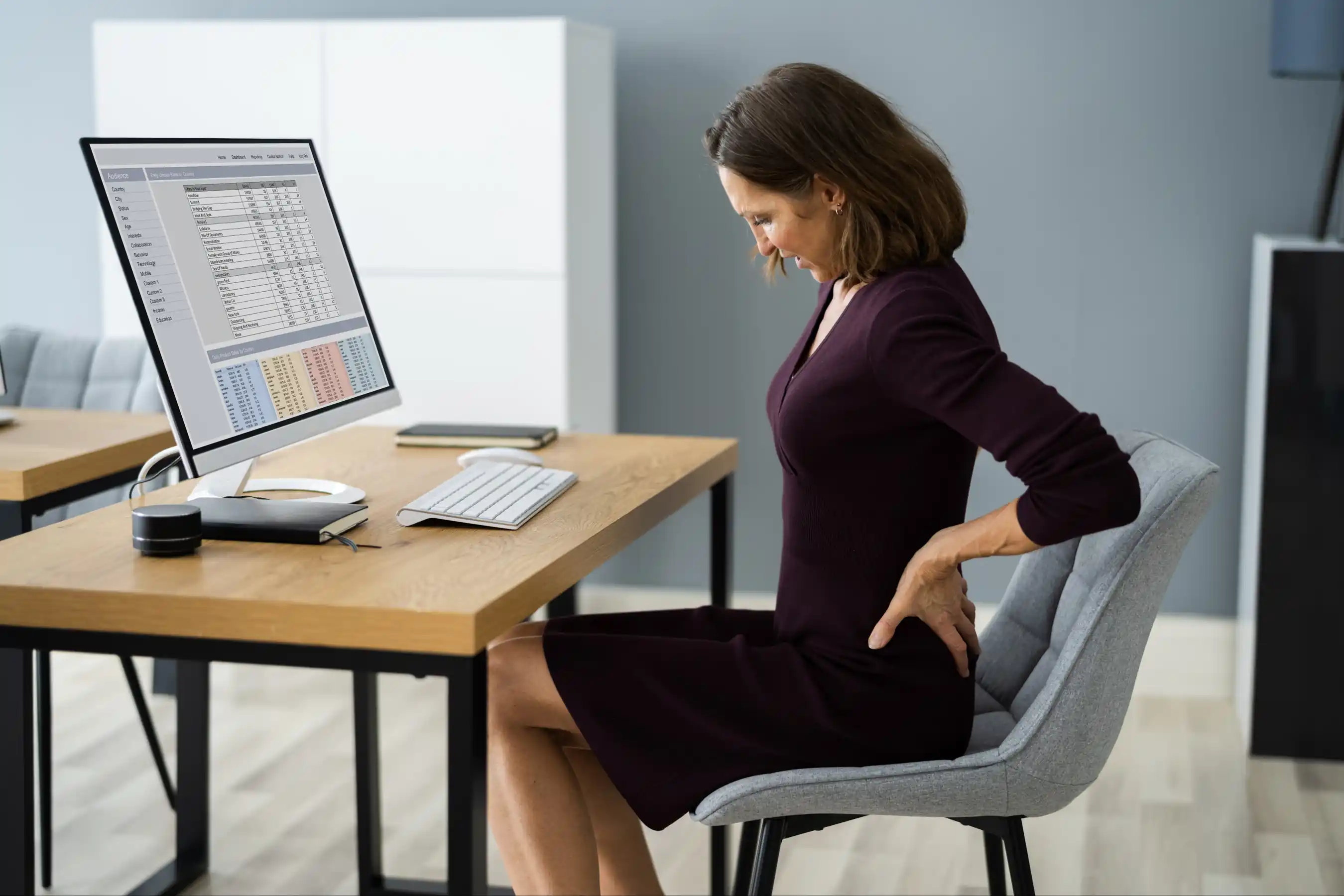
Many people place their computer screen too low, which leads them to look down for hours. This pulls the head forward and strains the neck and upper back.
2. Looking Down at Your Phone
'Text neck' (also called 'tech neck') happens when you constantly look down at a phone or tablet. It puts the same forward pressure on your spine as a poorly placed monitor.
3. Sitting for Long Stretches Without a Break
Staying in one position, even a good one, tires out your muscles. Cleveland Clinic recommends limiting sitting time and taking frequent breaks.
4. Sleeping Without Good Support
A mattress or pillow that does not keep your spine in line can leave you stiff in the morning.
5. Lifting and Twisting Carelessly
Repeated lifting, bending, and twisting can cause small overuse injuries in the thoracic spine.
| Habit | How It Affects Your Mid Back | Simple Fix |
|---|---|---|
| Screen below eye level | Pulls your head forward and strains upper back muscles | Raise your monitor so it sits straight ahead at eye level |
| Frequent phone use | Adds forward pressure on your neck and upper spine | Hold your phone closer to eye level |
| Sitting for hours | Tires and tightens back muscles | Get up and walk around about once an hour |
| Unsupportive sleep setup | Leaves your spine out of line overnight | Choose a mattress and pillows that keep your spine aligned |
| Careless lifting | Strains muscles and ligaments | Lift with care, and avoid twisting while lifting |
Signs Your Posture May Be Behind Your Pain
Posture-related pain often follows a pattern. You may notice:
- An ache or stiffness between your shoulder blades after long periods of sitting.
- Neck and shoulder tightness along with your back pain.
- Pain that builds over the course of the day.
- Relief when you stand up, stretch, or change positions.
- No specific injury that started the pain.
Simple Posture Corrections That Can Help
The good news is that small changes can make a real difference. Cleveland Clinic suggests the following steps.
Set Up Your Workstation
- Keep your shoulders and arms at about a 90-degree angle while you work.
- Position your monitor straight ahead at eye level, not below it.
- If you use a standing desk, keep your spine neutral and avoid leaning too far forward.
Keep Moving
Take a short break to walk around about once every hour. Even at your desk, shift positions and vary your movement throughout the day.
Strengthen Your Posture Muscles
These exercises help build the muscles that hold you upright:
- Superman: Lie on your stomach, lift your arms and legs a couple of inches off the ground, hold, relax, and repeat.
- Core work: Crunches, planks, and leg extensions strengthen the muscles that support your spine.
- Neck extension: Press your head back into a headrest or your hands and hold for 30 seconds, several times.
- Shoulder blade pulls: Hold an exercise band in front of you at shoulder height and stretch it across your chest to work the muscles that pull your shoulders back.
Stop any exercise that causes sharp pain, and check with your provider before starting a new routine.
Give It Time
Building better posture habits takes patience. Like any exercise routine, it can take about four to six weeks to see real change.
How Physical Therapy at The Center for Bone & Joint Disease Helps
If home changes are not enough, one-on-one physical and occupational therapy at The Center for Bone & Joint Disease can help. Therapists work closely with the practice's board-certified physicians to build a plan around your goals.
A therapy plan for posture-related back pain may include:
- Manual (hands-on) therapy.
- Therapeutic exercises to build strength and flexibility.
- Mobility training.
- Posture education.
- Changes to daily activities that reduce strain.
Cleveland Clinic's guide to upper back pain also lists physical therapy to improve strength and posture as a common treatment.
When Posture Changes Are Not Enough and an Evaluation Is Needed
Sometimes a rounded upper back is not caused by slouching at all. Kyphosis (a forward rounding of the upper back) can have several causes. In older adults, osteoporosis can weaken the spine's bones until they flatten and break, which can lead to a hunched posture. The Center for Bone & Joint Disease'sBone Health Clinic helps patients find and treat weak bones before more fractures happen.
See a spine specialist if:
- Your pain does not improve after a week.
- You have numbness or tingling in your buttocks, legs, or feet.
- You have a fever or weight loss you cannot explain.
- Your pain is severe, sudden, or getting worse.
- Your upper back looks more rounded over time, or you have lost height.
Call 911 if back pain comes with chest pain, trouble breathing, leg weakness, or loss of bladder or bowel control.
The neck and back pain specialists at The Center for Bone & Joint Disease can find the cause and start with the least invasive treatment, such as therapy or pain management, before considering other options.
Ease Posture-Related Mid-Back Pain With Expert Spine and Therapy Care
Poor posture can cause real thoracic spine pain, but simple habit changes and targeted exercise often help. When they are not enough, The Center for Bone & Joint Disease can uncover the cause and guide your recovery.
Request an appointment online with The Center for Bone & Joint Disease to start physical therapy for posture and back pain or a spine evaluation at the Hudson, Brooksville, or Lutz office.
Frequently Asked Questions
Can bad posture cause pain between the shoulder blades?
Yes. Slouching and leaning your head forward make the muscles between your shoulder blades work harder to hold you upright. Over time, this can cause tightness, aching, and stiffness.
How long does it take to fix poor posture?
It varies, but Cleveland Clinic notes it can take about four to six weeks of regular exercise to see real change. Daily habit changes, like moving every hour, can help you feel better sooner.
What is the best sitting position for mid-back pain?
Sit tall with your shoulders and arms at about a 90-degree angle, and keep your monitor straight ahead at eye level. Get up and move about once an hour.
Do I need a referral for physical therapy?
Not always. Many insurance plans allow you to start therapy without a referral, but some require a prescription or pre-authorization. The Center for Bone & Joint Disease's staff can help check your benefits.
How do I find a spine specialist in Tampa, FL?
The Center for Bone & Joint Disease cares for patients across the Tampa Bay area from offices in Lutz, Hudson, and Brooksville. You can request an appointment online or find each office's address and phone number.
